



Maximizing Efficiency with the Right SaaS Tools
In the rush of site preparation, "Get the ground tested" is often shouted down the radio. But tested for what?
Two of the most common requests we receive at MA2 Consultants are for Plate Bearing Tests and CBR (California Bearing Ratio) tests. While both assess the ground, they answer very different questions. Using the wrong one can lead to dangerous equipment failures or rejected planning applications.
What is CBR Testing?
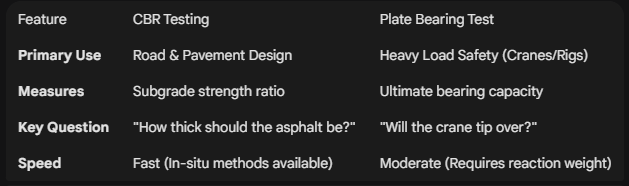
California Bearing Ratio (CBR) is primarily used for roads and pavements. It measures the strength of the subgrade relative to crushed rock.
- The Goal: To determine how thick your road layers need to be.
- The Output: A percentage score (e.g., "CBR of 5%").
- Best For: Designing new roads, car parks, and driveways.
What is a Plate Bearing Test?
A Plate Bearing Test measures the bearing capacity of the ground—essentially, how much weight the ground can support before it sinks.
- The Goal: To ensure the ground won't collapse under a heavy load.
- The Output: A value in kN/m² (pressure) and settlement data.
- Best For: Crane pads, piling mats, temporary works, and verifying working platforms.

Can you convert one to the other?
Technically, yes, formulas exist to estimate CBR from Plate Bearing results. However, for critical safety applications (like a 100-tonne crane), relying on a conversion formula is risky. Always specify the test that matches your actual intent.
The MA2 Approach
Whether you are designing a highway or setting up a mobile crane, we provide expert testing and inspections ensuring every project is built on certified, reliable ground. Unsure which test you need? Call our technical team before you book.